

Key Takeaways
- Tax fraud scams spike every year between January and April — but the identity theft that enables them happens year-round
- There are three distinct types: fake IRS calls demanding payment, tax identity theft (someone files before you), and fraudulent tax preparers — each requires a different defense
- The IRS never calls demanding immediate payment. They never threaten arrest. They never request gift cards or wire transfers. If a call does any of these things, hang up immediately.
- Filing your return early is one of the most effective defenses against tax identity theft — it closes the window before a scammer can file first
- Enroll in the free IRS Identity Protection PIN program — a six-digit code required to file your return that completely blocks fraudulent filings
In This Guide
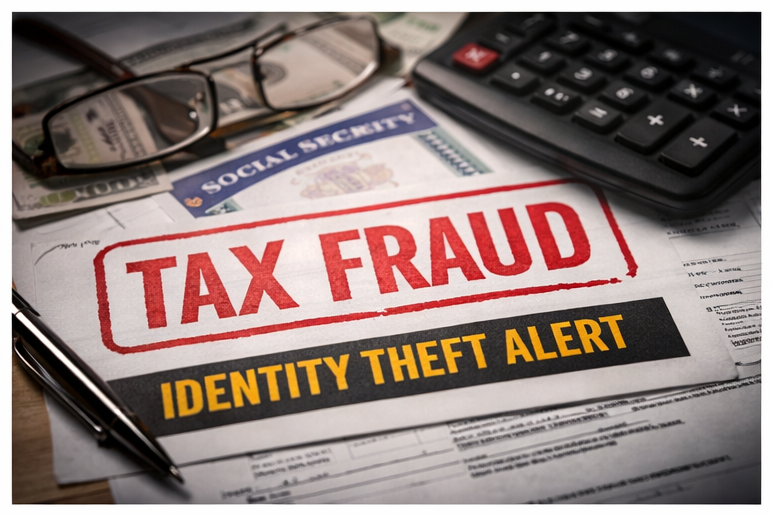
In 2026, tax fraud scams ramp up every January as criminal operations around the world gear up for one of their most profitable seasons of the year. Tax season is not just busy for accountants and filers — it is the peak operating period for three separate categories of fraud that collectively cost Americans hundreds of millions of dollars annually.
In fact, tax season is is so lucrative for scammers is straightforward: it is the one time of year when almost every adult is thinking about their Social Security number, their income, their financial accounts, and their relationship with the federal government. Scammers exploit every single one of those pressure points.
The 3 Types of Tax Fraud Scams
Therefore, understanding that these are three separate problems — with different mechanics and different defenses — is the foundation of protecting yourself. Most people think of “tax scams” as a single thing. They are not.
Type 1: The IRS Phone Scam — What It Sounds Like
First, consider the phone scam approach: the call sounds official. The caller identifies themselves as an IRS agent, sometimes gives a badge number, and tells you that you owe back taxes. The amount is specific — $3,847, or $12,200 — which makes it sound more credible. They tell you that if you do not pay immediately, law enforcement will arrive at your home or workplace to arrest you.
Notably, the payment method they request is always a tell: gift cards, wire transfer, cryptocurrency, or a “payment portal” website that looks official but is not.
What the IRS will never do on a phone call: According to the IRS official scam alerts page, the agency always sends letters before calling. It never demands immediate payment without giving you the opportunity to question or appeal, never requests gift cards, wire transfers, or cryptocurrency, and never threatens arrest by local police. Any call that does any of these things is fraud — 100% of the time.
Type 2: Tax Identity Theft — How It Works
By contrast, tax identity theft fraud happens before you ever interact with anyone. A scammer who has obtained your Social Security number — from a data breach, a phishing attack, or a purchased criminal database — files a tax return in your name before you do. They claim your refund. You find out when you try to file and the IRS tells you a return has already been submitted under your SSN.
Consequently, the solution here is not reactive — it is proactive. File early. Enroll in the IRS Identity Protection PIN program. Freeze your credit. These three actions, taken together, make tax identity theft nearly impossible to execute against you.
Type 3: Fraudulent Tax Preparer Scams
Additionally, a tax preparer you hire — from a pop-up storefront, a classified ad, or a social media post — manipulates your return to generate a large refund by adding deductions or credits you are not entitled to. They may charge you a percentage of the refund, which incentivizes them to make it as large as possible regardless of legitimacy.
As a result, when the IRS audits the fraudulent return, you — the filer — are liable. Not the preparer. You are responsible for what is on your return whether you prepared it or not.
For that reason, always verify a preparer’s credentials at IRS.gov — verify a tax professional-agent. Legitimate preparers have a Preparer Tax Identification Number (PTIN). Anyone offering guaranteed large refunds or charging fees based on refund percentage is a red flag.
Your Complete Tax Fraud Defense Plan
- File your return early — the closer to January 1 the better. The fraudulent filing happens before yours, so the earlier you file, the smaller the window.
- Enroll in the IRS IP PIN program at IRS.gov/ippin. Free, takes ten minutes, blocks fraudulent filings entirely.
- Freeze your credit at all four bureaus. Tax identity theft and broader identity theft share the same root cause — your SSN in criminal hands.
- Verify any IRS contact by calling 1-800-829-1040 directly. Do not call back numbers given in suspicious calls or letters.
- Use only credentialed tax preparers — check PTIN at IRS.gov before giving anyone your tax documents.
- Protect your SSN obsessively — it is the enabler of every tax fraud category. Treat it like a password to your entire financial life.
If You Have Already Been Hit
If someone filed a return in your name, act immediately: file Form 14039 (Identity Theft Affidavit) at IRS.gov, then file your legitimate return on paper. Call the IRS Identity Protection Unit at 1-800-908-4490. Freeze your credit. The resolution process takes months but your legitimate refund is protected throughout.
Similarly, if you paid a fake IRS caller: file a police report, report to the FTC at ReportFraud.ftc.gov, and contact your bank immediately if the payment was via bank transfer. Gift card payments are largely unrecoverable — but file the reports anyway, as they contribute to the case against the operations behind these calls.
For a complete step-by-step prevention guide, see our article on What To Do If You Got Scammed.
Lock Down Your Identity — Before Scammers Strike
Get the free 30-step Identity Lock Checklist and the Family Protection Kit — everything you need to protect yourself and your whole family starting tonight.
Leave a Reply